The life of those who dwell in the secret place of the Most High may be called a Hidden Life, because the animating principle, the vital or operative element, is not so much in itself as in another. It is a life grafted into another life. It is the life of the soul, incorporated into the life of Christ; and in such a way, that, while it has a distinct vitality, it has so very much in the sense, in which the branch of a tree may be said to have a distinct vitality from the root.

Wednesday, July 20, 2016

Dead, Yet Alive Again

It is said that the Christian who has experienced in himself the highest results of religion, is dead, and is alive again. That is to say, he is dead to private aims and private interests; dead to selfish passions, prejudices and pleasures; dead to worldly reputation and honor. But, being dead to himself and whatever concerns himself, he is alive to God; alive to the aims and interests for which Christ came down from heaven, alive to the honor which comes from God, and from God only.

— edited from A Treatise on Divine Union (1851) Part 8, Chapter 8.

Tuesday, July 19, 2016

Thou Giver of the Rising Light

I.
 
Thou Giver Of the rising light,
Thou Author of the morning ray;
At whose command the shades of night
Are changed to bright and sudden day;
Thou too canst rend the clouded heart,
Enveloped in the shades of sin;
And let the light, that dwelt apart,
The glory and the gladness in.
 
II.
 
Oh God, our Father and our Friend,
Dark is the cloud that wraps us now;
But not in vain our prayers ascend,
Nor hopeless at thy feet we bow.
'Tis in the dark, distressing hour,
That thou dost hear thy people's cry;
And come and clothe them in thy power,
And hide them in thy majesty.

Religious Maxims (1846).

Monday, July 18, 2016

Inward Recollection and Prayer

Again, we have good reason for supposing, that the state of inward recollection is eminently propitious to the spirit and practice of prayer. There certainly can be no acceptable prayer without a considerable degree of recollection. And the requirement that we should "pray without ceasing," seems almost necessarily to imply, that we should always be in a recollected state.

He, who is always dissipated like a house open to all comers and goers, is very unfit for prayer. He, that will never pray, but in the hour that calls him to it, will never do it well. But he, that would succeed in this great exercise, ought, by continual RECOLLECTION, to keep himself always ready, and in an actual disposition for praying. — Francis de la Combe, Letter of Instruction on Christian Perfection.
One of the great excellencies of the state of inward recollection is, that it gives us the place of central observation and power, the KEY, if we may so express it, to the position of the religious life; and enables us to exercise an effective control over its whole broad extent. That is to say, it places us in the most favorable position to discover and meet the attacks of our spiritual adversaries, and also to render our own movements and efforts fully available. However well disposed may be our intentions, whatever good purposes we may have formed, whatever may be the formality and solemnity of our recorded resolutions, they will ever be found in a great degree useless, without this aid. It will be in vain to think of living a life of true religion, a life in which God himself is the inspiring element, without a present, permanent, and realizing sense of his presence.  It  is, therefore, not without a good degree of reason, that the pious Cecil has remarked, that "RECOLLECTION is the life of religion."
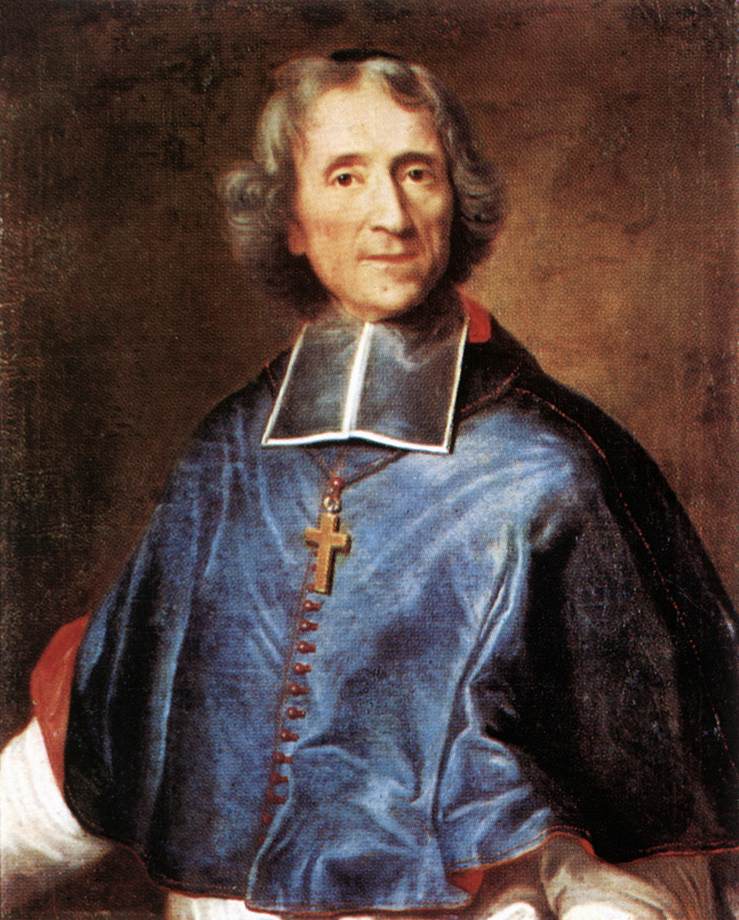
— edited from The Interior or Hidden Life (2nd Edition, 1844) Part 3, Chapter 7.

Saturday, July 16, 2016

Inward Recollection Inhibits the Self

Another favorable result, connected with the habit of inward recollection, is, that, by confining the mind to the present moment, and retaining God in the position of a present counselor and guide, it prevents the exercise of reflex and selfish acts on the past, and also undue and selfish calculations for the future. Self, if we permit it, will either secretly or openly find nourishment every where; and every where, therefore, we are to fight against it, overcome it, slay it. When the past is gone and we are conscious that we have done  our duty in it, if we would not have the life of self imbibing strength from that source, we must leave it with God in simplicity of spirit; and not suffer it to furnish food either for vanity or disheartening regrets. We should avoid also all undue and selfish calculations for the future, such as continually agitate.and distract the minds of the people of the world; and indeed all thoughts and anticipations of a prospective character, which do not flow out of the facts and the
relations of the present moment, and which are not sanctioned by a present divine inspection.

Happy is the man who retains nothing in his mind, but what is necessary; and who only thinks of each thing just when it is the time to think of it; so that it is rather God, who excites the perception and idea of it, by an impression and discovery of his will which we must perform, than the mind's being at the trouble to forecast and find it. — Fenelon's Directions for a Holy Life.

To these important results, there can be no question, that the habit of inward recollection is exceedingly favorable.

— edited from The Interior or Hidden Life  (2nd Edition, 1844) Part 3, Chapter 7.

Friday, July 15, 2016

Inward Recollection Helps Us to Know the Truth

Inward Recollection helps us to know the truth, especially moral truth. The supreme desire of him, who has fully given his heart to God, is, not merely that he may be happy and thus please himself, but that he may KNOW and DO God's will. Knowledge, therefore, (we do not mean all kinds of knowledge, but particularly that which has relation to the divine will,) is obviously of the greatest consequence. And those will know most, who are the most recollected. The truth opens itself to the mind, that faithfully perseveres in the state of inward recollection, with remarkable clearness. And the reason, in part, is, because the mind, in a religiously recollected state, ceases to be agitated by the passions.

The light of God shines as the sun at noon day; but our passions, like so many thick clouds opposed to it, are the reason that we cannot perceive it. Love, hatred, fear, hope, grief, joy, and other vicious passions filling our soul, blind it in such a manner that it sees nothing but what is sensible and suitable to it;  refusing all that is contrary to its own inclinations and being thus filled with itself, it is not capable of receiving the light of God. — Bourignon's Light in Darkness, p. 14.

Now there can be no question, that Inward Recollection secures the soul in a most remarkable degree, from inordinate passions. Such passions cannot well flourish, with the eye of God distinctly looking upon them. And accordingly, under such circumstances, the illuminative suggestions of the Holy Spirit readily enter the mind, and operate in it, and reveal the divine will. So that he, who walks in recollection, may reasonably expect to walk in the light of true knowledge and of a divine guidance.

And not only this, Inward Recollection tends to concentrate, and consequently to strengthen very much the action of the intellectual powers.  It  does this, in part, and indirectly, by disburdening the mind of those wandering thoughts and unnecessary cares and excitements, which, with scarcely any exception, overrun the minds of those who do not live in a recollected state.

— edited from The Interior or Hidden Life (2nd Edition, 1844) Part 3, Chapter 7.

Thursday, July 14, 2016

Inward Recollection: Diminishes Occasions of Temptation

The state of inward recollection tends to diminish greatly the occasions of temptation. It is very obvious, that he, who knows nothing but his present duty in itself and in its relations, which is all that it is necessary for him  to know, cannot be so much exposed in this respect, as other persons. Unspeakable dangers must, of necessity, beset the mind, which is full of worldly activity, and which is continually discursive: running upon errands where it is not called; curiously and unnecessarily speculative; prying  oftentimes  with microscopic minuteness, into the concerns of others, not only without reason but against reason. What a flood of tempting thoughts must flow out upon these various occasions, and throng around the mind! What suggestions, which Satan knows well when and where to apply, to envy, distrust, anger, pride, worldly pleasure, ambition; none of which probably would. have approached the mind that remained recollected in God.

— edited from The Interior or Hidden Life (2nd Edition, 1844) Part 3, Chapter 7.

Wednesday, July 13, 2016

Inward Recollection: Favorable to the Best Improvement of Time

One of the benefits connected with the state of inward recollection is, that it is favorable to the best improvement of time. It will be a matter of course, that the person, who lives in religious recollection, will avoid unnecessary employments. With the idea of God, and perhaps we may add with the reality of God, continually present in his heart, scrutinizing every motive and action, and continually enforcing the claims of moral obligation, he will find no time to be spent idly, nor for the mere purposes of pleasure. Nor can he under such circumstances be the subject of internal dissipation; of vain and wandering imaginations and reveries; but will be enabled, to a degree unknown before, to bring every thought as well as every feeling, into subjection.—

In order to prevent misapprehension, it may properly be added here, that whatever recreation of body or mind, either by social intercourse or in any other way, is really required by the physical and mental constitution and laws, is entirely consistent with duty and with inward recollection. A remark, however, which requires, in its practical application, no small share of wisdom.

— edited from The Interior or Hidden Life (2nd Edition, 1844) Part 3, Chapter 7.